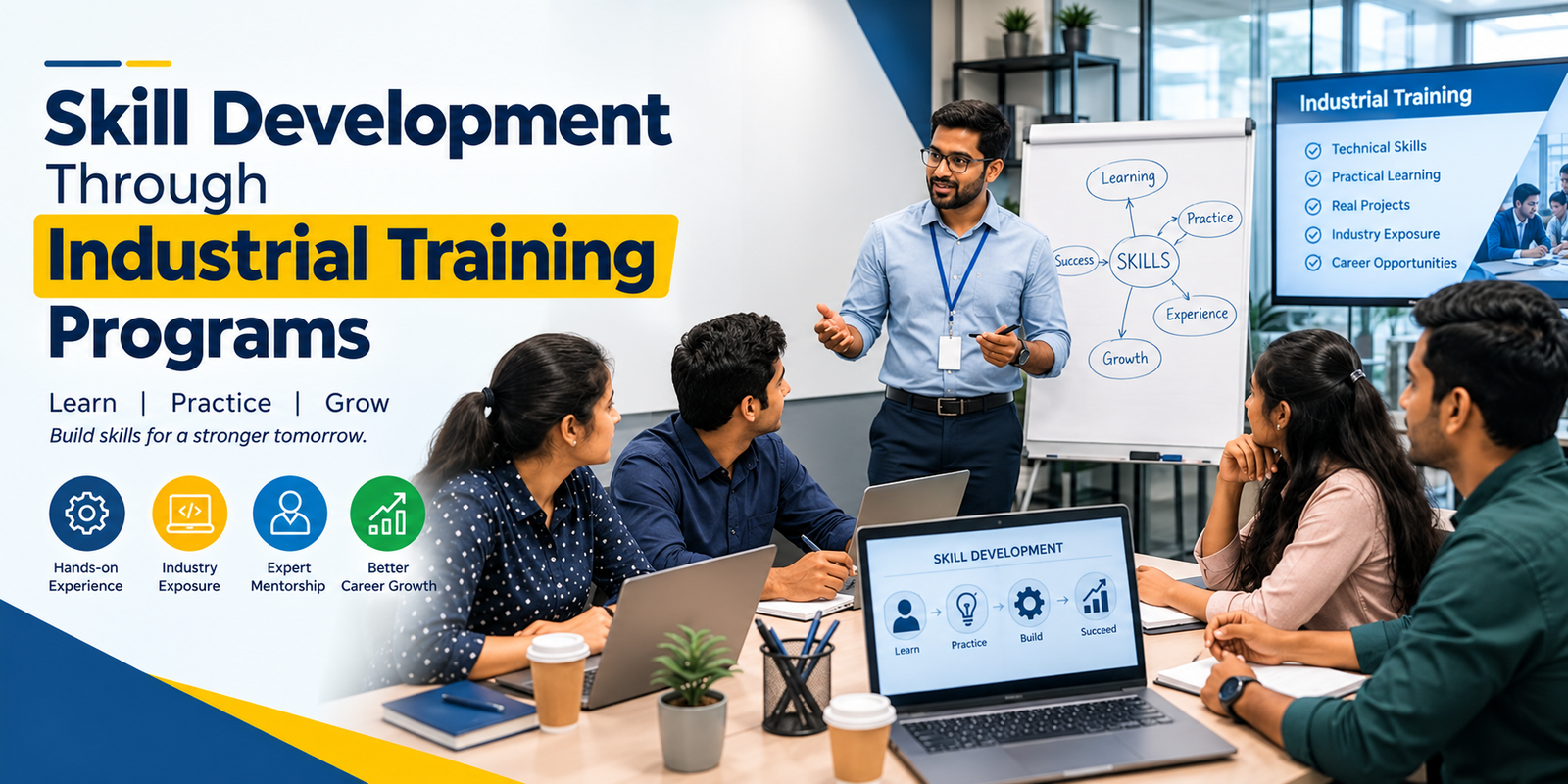
Skill Development Through Industrial Training Programs
In today’s competitive job market, having a degree alone may not always be enough to build a successful career. Employers increasingly look for candidates who have practical knowledge, technical abilities, problem-solving skills, and experience with real-world projects. This is where Skill Development Through Industrial Training Programs becomes important for students, fresh graduates, and aspiring professionals. Industrial training helps learners connect classroom concepts with practical workplace requirements. Instead of focusing only on theoretical knowledge, students get opportunities to work with industry-relevant tools, technologies, projects, and professional workflows. With the right training approach, learners can improve their technical skills and become more prepared for internships, employment, and future career opportunities.What Is Skill Development Through Industrial Training Programs?
Skill Development Through Industrial Training Programs refers to structured training that focuses on developing practical and professional skills according to industry requirements. These programs are designed to give students exposure to real-world tasks and help them understand how knowledge is applied in professional environments. Depending on the field, industrial training may include programming, web development, software development, data analytics, artificial intelligence, machine learning, digital marketing, UI/UX design, database management, and other technology-related skills. The main objective is to make learners more confident in applying their knowledge. Students can work on practical assignments and projects while learning how professionals approach problems and complete tasks.Why Is Industry Based Skill Development Training Important?
Traditional classroom education provides a strong foundation, but practical experience plays an important role in professional development. Industry based skill development training allows learners to understand the difference between academic concepts and workplace implementation. Some important benefits include:1. Practical Knowledge
One of the biggest advantages of industrial training is hands-on learning. Students can practice concepts instead of simply reading about them. For example, a student learning web development can create actual web pages, work with databases, understand responsive design, and practice website development techniques.2. Industry-Relevant Skills
Technology and business requirements continue to change. Training programs that follow current industry practices can help students learn skills that are relevant to modern workplaces. Learning commonly used software, programming languages, development techniques, analytics tools, and digital platforms can improve a learner’s technical foundation.3. Real-World Project Experience
Projects are an important part of professional skill development. Industrial training can give students the opportunity to work on projects that simulate real business requirements. Project-based learning can improve problem-solving, planning, teamwork, testing, documentation, and implementation skills.4. Better Career Preparation
Students often face difficulty when moving from education to employment because they have limited practical exposure. Industrial training can help reduce this gap by introducing learners to professional workflows. Through Skill Development Through Industrial Training Programs, students can develop practical experience that they can discuss during interviews and include in their portfolios.5. Improved Confidence
Practical training can make students more comfortable with technical tasks. When learners repeatedly practice skills and complete projects, they can gradually improve their confidence. This confidence can be useful during interviews, internships, presentations, and workplace assignments.Skills Students Can Develop Through Industrial Training
The exact skills depend on the selected program and career goal. Technology-focused industrial training may include several areas.Technical Skills
Students can develop technical abilities related to:- Python programming Web development Software development Data analytics Artificial intelligence Machine learning Database management Digital marketing UI/UX design Advanced Excel Website design Professional Skills
- Communication Teamwork Time management Problem-solving Presentation skills Project planning Documentation Workplace discipline
Role of Projects in Industrial Training
Projects are one of the most valuable components of practical training. A project allows students to apply multiple concepts to solve a specific problem. For example, a student completing data analytics training might work with a dataset, clean the information, analyze trends, create visualizations, and prepare a report. Similarly, a web development student may create a complete website with front-end and back-end functionality. Project-based learning helps students understand how individual skills work together. It can also provide useful material for a portfolio.Who Can Join Industrial Training Programs?
Industrial training can be useful for different categories of learners, including:- College students BCA and MCA students B.Tech and engineering students IT students Recent graduates Job seekers Career beginners Students looking for practical experience Working professionals who want to upgrade their skills